 Last fall, it was data-driven marketing I declared as the new black when I cited a recent NYT article glamorizing what had traditionally been the realm of geeky good with numbers types (like, ahem, yours truly). Data-driven marketers, it said, are a hot new business persona that looks something like Madison Ave. meets Wall Street: Don Draper meets Gordon Gecko. At last! Those who actually enjoy manipulating spreadsheets, know the difference between a mean and a median, love to talk about outliers and statistical confidence, experimental design and hypothesis-driven adaptive strategies could come out. “Hi my name is Bonnie and I’m a dataholoic,” I could finally admit—and become fashionable!
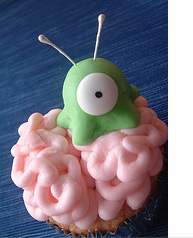
This fall, I’ve discovered that the right brain is the new black and I’m just as thrilled. “Hi my name is Bonnie and I’m a closet creative,” I can proclaim with dignity. What’s hot this year? Emotion, context and meaning. Story telling, passion, values and experience—all very right brain and very, very fun.
But wait – am I a dataholic or a closet creative? Could I perhaps be both? A great way to find out is to ask yourself is, “Do I think in words (analytical/left brain) or pictures (creative/right brain)?”
My assessment is that I am both. I had to stop and think when that question was put to me recently. I didn’t have an immediate idea as to whether my thought patterns were language-driven or pictorial. I was told that those who stumble over this question and hesitate to choose are indeed both—equally right and left brain oriented.
It seemed a tough pill to swallow. For my left brain, anyway. It likes definition, categories, simple and neat explanations. Pondering upon this, I lamented that I can never claim complete loyalty to either side of my brain, destined as I am to live in both hemispheres, born of mixed-hemisity, bi-hemisual (don’t you love coining a neologism? very right-brain), living half my consciousness in linear analysis, words, language and the other in non-linear synthesis, pictures, and possibilities.
But then my right brain remembered a catch phrase I heard a year or two ago, “We need to stop chasing either/or and start reaching for and.” And I realized: Being bi-hemisual means I can don which ever is in season—right brain or left—and look equally as fetching.
 Speaking of right brain, I recently had the good fortune to work with an interesting social business,
  In
In 
 Surprisingly courageous remarks from Jonah Bloom at Ad Age about where the
  Despite a sincere enthusiasm for all things Internet, Site can’t help but to have noticed
  First, the good news. For those who make their living online, an impressive 68% of advertisers plan to increase digital spending over the next 6 months.
 btsite
You must be logged in to post a comment.